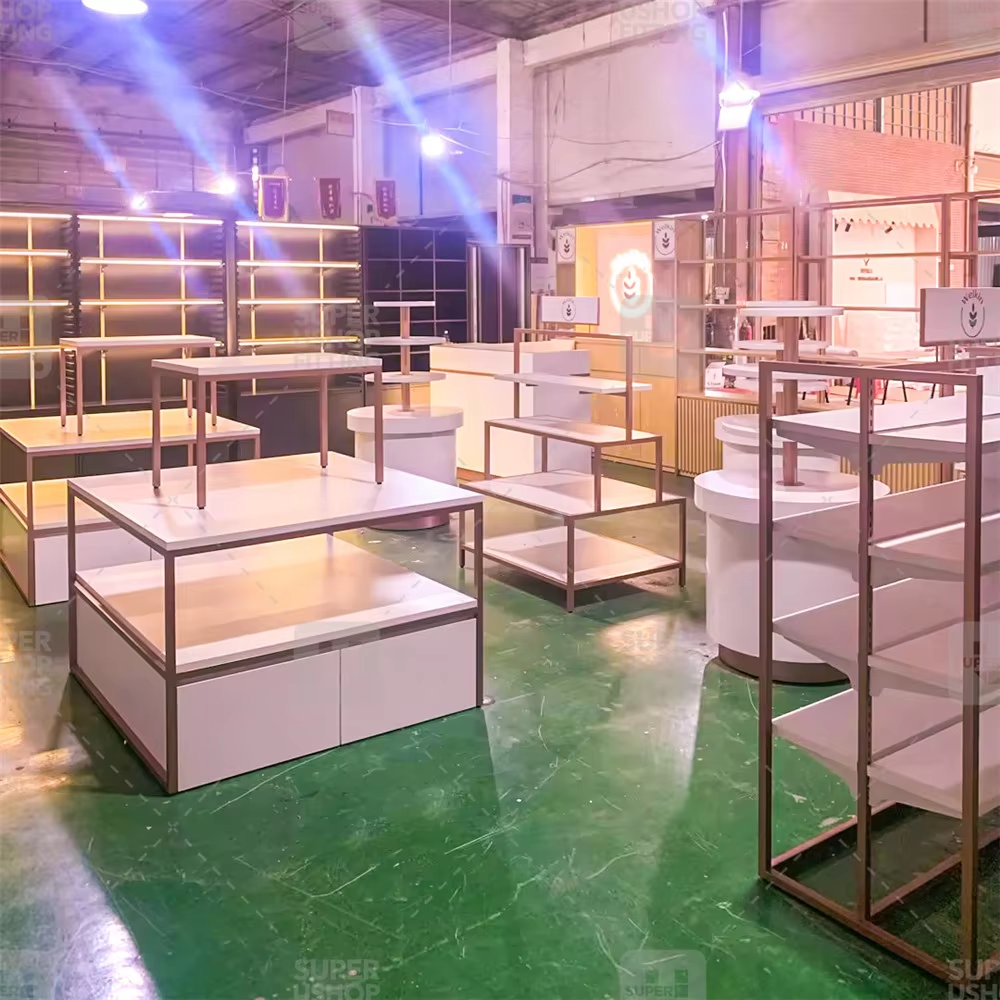
Walking into a store today feels different than it did five years ago. That's not an accident. Retail space design has changed — and it's changing faster than most people realize.
For retailers and brand owners, keeping up with these changes isn't just about looking modern. It's about moving product. A well-designed retail space can increase dwell time by 40% and boost conversion rates significantly. We've seen this firsthand through the custom retail displays and signage systems we've built for UK retailers over the years.
Here are the five retail space design trends that actually matter in 2025 — not the theoretical ones from design conferences, but the ones we're seeing implemented in real stores right now.
1. Sustainability Is No Longer Optional
Three years ago, sustainable materials were a nice-to-have. Today, they're a baseline expectation. Major UK retailers like Tesco, Sainsbury's, and Waitrose are now requiring their display suppliers to provide carbon footprint data for every fixture.
What this means in practice: more recycled metal and reclaimed wood in store shelving, modular displays that can be reconfigured instead of thrown away, and water-based paints replacing solvent-based ones. It's not just about looking green — it's about meeting procurement requirements that didn't exist two years ago.
We've switched to powder-coated finishes and recyclable aluminum for most of our display racks and shelving specifically for this reason. Our clients in the UK won't accept anything less.
2. Digital Signage That Actually Works
Digital signage has been "the next big thing" for about ten years. But in 2025, it's finally hit the sweet spot. Prices have come down, reliability has gone up, and retailers have figured out where it actually adds value.
The key insight: digital signage works best when it's integrated with physical displays, not replacing them. A product shelf with built-in LED price strips, or a mannequin display with a video backdrop showing the product in use — that's where the magic happens. Standalone digital screens in random corners? Those are distractions.
3. Flexible, Modular Fixtures
Retailers are tired of ripping out and replacing fixtures every time they refresh a brand or change a product line. The cost is ridiculous, and the waste is worse.
The solution is modular display systems. Same frame, different inserts. Same shelving unit, different shelf heights. Same base structure, different face panels. This approach cuts fixture replacement costs by 50-70% and lets stores refresh their look in days instead of weeks.
4. Lighting as a Design Tool
Retailers have woken up to the fact that bad lighting kills sales. It's that simple. A product that looks gorgeous in the showroom can look flat and unappealing under bad store lighting.
We're seeing more integrated lighting in display fixtures — LED strips hidden in shelf edges, spotlights built into display cases, and color-temperature-controlled lighting that shifts throughout the day. The trend is toward lighting that highlights the product without drawing attention to itself.
5. The "Instagrammable" Moment
Retailers finally understand that a store isn't just a place to sell products — it's a place to create content. A photo-worthy display generates free marketing when customers share it online.
This doesn't mean every store needs a neon sign wall. It means designing at least one visual anchor per floor — a striking product display, an unusual material combination, or a clever use of negative space — that makes someone want to pull out their phone.
Putting It All Together
None of these trends exist in isolation. The best retail spaces in 2025 combine them: a modular, sustainable fixture system with integrated digital signage and thoughtful lighting, designed around at least one memorable visual moment.
"The stores that are winning right now aren't the ones with the biggest budgets. They're the ones that understand their physical space is their best marketing asset."
If you're planning a retail refresh or a new store build, start with your display fixtures. Everything else — lighting, signage, layout — follows from there. Get in touch and we can walk through what's possible for your space.
Questions or looking for a quote? Contact our team — we respond within 24 hours.